Canada Tariff Fight Narrows to Steel, Autos and a New U.S. Threat
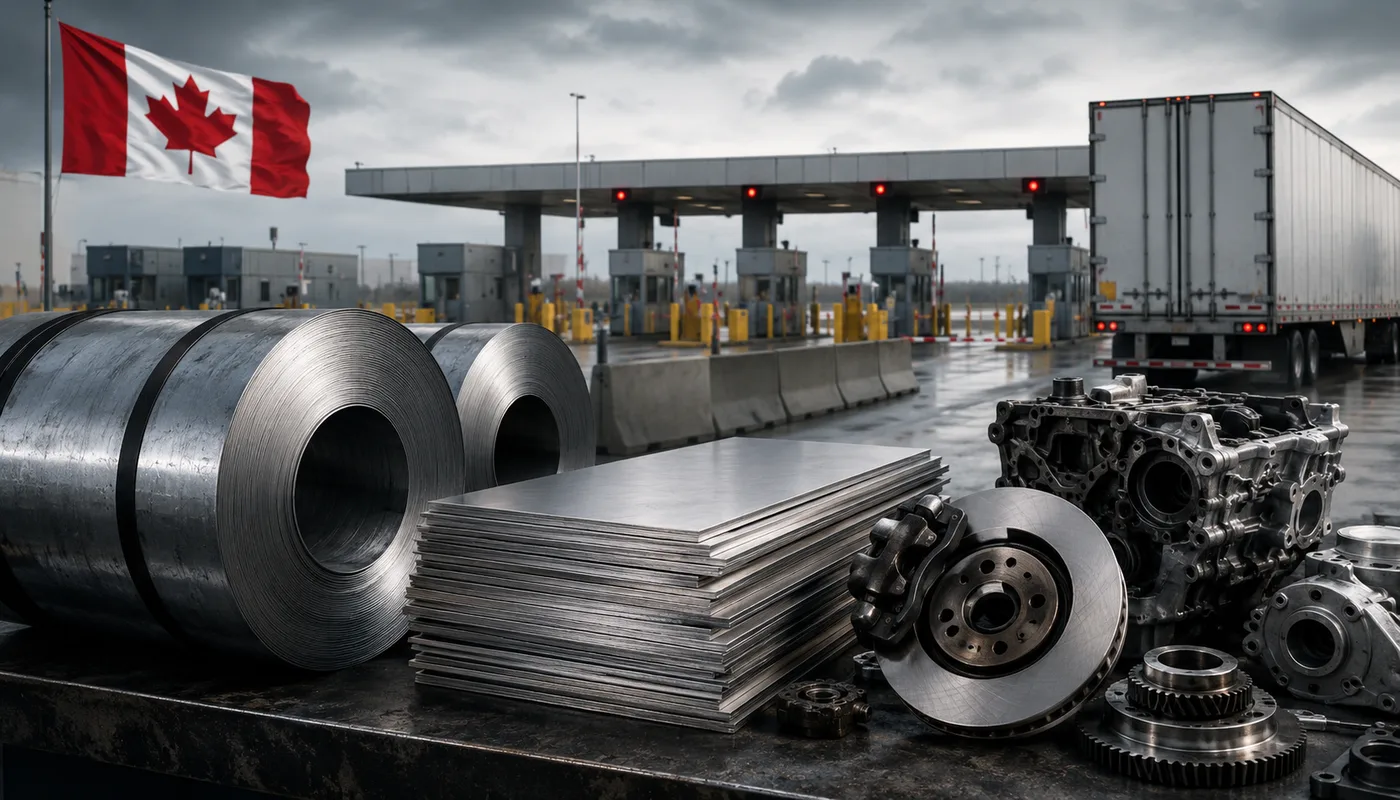
Canada’s tariff fight now targets steel, aluminum and autos while CUSMA shields most trade from the broadest U.S. duties.
Key takeaways
Canada’s tariff issue is now a targeted trade-pressure system, not a blanket border tax.
- Canada removed most 25% counter-tariffs on U.S. goods on September 1, 2025, but kept steel, aluminum and automobile countermeasures (Finance Canada).
- On June 3, 2026, Ottawa proposed a one-year extension of steel tariff-rate quotas and tariff relief, with over-quota imports still facing 50% (Finance Canada).
- CUSMA remains the shock absorber: about 85% of Canadian exports to the U.S. remain tariff-free, and Canada’s effective U.S. average tariff rate is 5.2% (Spring Economic Update 2026).
- The newest risk is U.S. escalation: USTR proposed 10% additional duties for Canada and similar economies over forced-labour import enforcement (USTR).
A tariff is a tax on imported products, usually collected by a customs authority when goods cross a border (Trade Commissioner Service). The paradox in Canada is that most Canada-U.S. trade still moves through CUSMA preferences, yet the tariff fight keeps spreading across sectors and statutes. Ottawa is no longer using one wall. It is using a pressure valve: keep retaliation where Washington keeps sectoral duties, protect CUSMA trade where possible, and offer relief when tariffs punish Canadian manufacturers using U.S. inputs. The useful frame is tariff triage: origin first, sector second, relief third.
Why is tariff trending in Canada now?
Tariff is trending in Canada because Ottawa extended sector measures while Washington opened a new forced-labour tariff track.
What changed, as of June 3, 2026: Finance Minister François-Philippe Champagne announced that Canada would seek Governor in Council approval to extend steel tariff-rate quotas for non-CUSMA partners and horizontal tariff relief for eligible U.S. steel and aluminum products (Finance Canada). The steel TRQ extension would run to June 27, 2027, and the tariff-relief extension would run to June 30, 2027 (Finance Canada).
A tariff-rate quota, or TRQ, lets a set quantity enter at a lower duty but charges a higher duty above the quota (Finance Canada). Canada says quotas would stay at 20% of 2024 volumes for partners without a free trade agreement and 75% for free-trade partners outside CUSMA; imports above quota would face a 50% tariff, while the United States and Mexico remain exempt as CUSMA partners (Finance Canada).
The U.S. front is separate. On June 2, 2026, USTR proposed additional duties on products from 60 economies after Section 301 investigations into forced-labour import enforcement, listing Canada among six economies that allegedly failed to enforce an existing ban effectively (USTR). Written comments are due July 6, 2026, and hearings are scheduled for July 7, 2026 (USTR).
What tariff rules apply to Canada-U.S. trade right now?
Canada-U.S. tariff rules now split into three legal lanes: CUSMA origin, U.S. sectoral duties, and Canadian countermeasures.
| Lane | Current effect |
|---|---|
| CUSMA origin | Canadian and Mexican CUSMA-compliant exports are exempt from the U.S. 10% Section 122 tariff imposed on February 24, 2026 (Trade Commissioner Service). |
| U.S. sectoral duties | The U.S. maintains 50% tariffs on Canadian steel and aluminum, 25% on autos and trucks, 50% on semi-finished copper, and 10% on softwood timber and lumber (Trade Commissioner Service). |
| Canadian countermeasures | Canada removed most March 2025 counter-tariffs on September 1, 2025, but left steel, aluminum and automobile tariffs in force (Finance Canada). |
The myth correction is blunt: CUSMA can make a product tariff-free under one lane and still leave it exposed under another. Canada says US$2.5 billion in goods and services crosses the border each day, so “narrow” sector tariffs can still hit large supply chains (Finance Canada).
What is Canada’s tariff decision rule?
Canada’s tariff decision rule is tariff triage: verify origin, check sector exposure, then look for relief.
First, test CUSMA. Canada says about 85% of exports to the U.S. remain tariff-free under CUSMA, giving Canadian goods a 5.2% effective U.S. average tariff rate, the lowest among major U.S. trading partners (Spring Economic Update 2026). That figure explains why Ottawa protects the agreement instead of matching every U.S. move.
Second, check the sector. Canada removed $14.2 billion in goods hit since March 13, 2025 and $30 billion in goods hit since March 4, 2025 from broad 25% counter-tariffs, but kept steel, aluminum and automobiles covered because the U.S. still maintains sectoral tariffs without CUSMA exemptions (Finance Canada).
Third, check relief. Canada says temporary remission for steel and aluminum tariffs supports businesses relying on U.S. inputs, and the June 3 extension keeps eligible auto, aerospace, health, safety and national-security uses covered (Finance Canada). Companies importing goods for eventual export may also qualify for CBSA duties relief or drawback programs (Trade Commissioner Service).
The tradeoff is real. A tariff that protects a steel mill can raise costs for a manufacturer buying steel. Relief reduces that damage, but it also makes retaliation less clean. That is not hypocrisy. It is what happens when a trade war runs through an integrated supply chain.
Who pays a tariff in Canada?
The importer of record pays the tariff at the border, but the economic burden can move through contracts, margins and prices.
The Trade Commissioner Service says the importer of record is responsible for paying tariffs, while commercial terms can decide how companies split the cost between importer and exporter (Trade Commissioner Service). A tariff is not a bill sent neatly to a foreign government. It is a border charge first, then a negotiation over who absorbs the pain.
For travellers and consumers, CBSA says that as of September 1, 2025, Canada’s 25% U.S. surtax applies only to steel and aluminum products and auto imports originating from the United States, and the final amount is determined by a border services officer (CBSA). Services are different: tariffs apply to physical goods crossing borders, not software subscriptions, consulting, architecture, education or engineering (Trade Commissioner Service).
FAQ
Canada’s tariff FAQ is a practical guide to who pays, what is exempt, and what changed in June 2026.
What is a tariff in Canada?
A tariff in Canada is an import duty or customs duty, meaning a tax imposed on imported physical goods and collected when goods cross the border (Trade Commissioner Service).
Are all U.S. goods entering Canada subject to tariffs?
No. Canada removed most broad U.S. counter-tariffs on September 1, 2025, while tariffs on U.S.-origin steel, aluminum and auto imports remain in force (Finance Canada).
Does CUSMA exempt Canadian exports from all U.S. tariffs?
No. CUSMA-compliant exports can avoid the U.S. 10% Section 122 tariff, but sectoral U.S. tariffs still apply to steel, aluminum, copper, lumber and certain vehicles (Trade Commissioner Service).
What changed on June 3, 2026?
Canada announced a proposed one-year extension of steel tariff-rate quotas and tariff relief, with extensions running to June 27 and June 30, 2027, subject to Governor in Council approval (Finance Canada).
Sources
These sources are the official and primary references used for the current tariff claims in this article.
- Canada to extend steel and aluminum tariff measures to support workers and businesses — Department of Finance Canada, 2026-06-03.
- Canada’s response to U.S. tariffs on Canadian goods — Department of Finance Canada, 2026-01-15.
- Answers to common questions about U.S. tariffs — Trade Commissioner Service, 2026-03-20.
- Chapter 1: Building Canada: All for Canada, Spring Economic Update 2026 — Department of Finance Canada, 2026-04-28.
- USTR makes findings and proposes action in 60 Section 301 investigations relating to forced labor goods — United States Trade Representative, 2026-06-02.
- Estimate duty and taxes — Canada Border Services Agency, 2025-11-25.